
CHIYODA Philippines once again demonstrated its unwavering commitment to environmental stewardship by returning as a valued partner of FEED’s tree-planting initiatives in the Sierra Madre Mountain Range. On May 19, 2026, 15 dedicated employees and volunteers of CHIYODA Philippines joined hands with FEED, local forest guardians, and community partners at the UP Laguna–Quezon Land Grant to plant 200 native Philippine tree seedlings, reaffirming that meaningful environmental restoration is built through long-term partnerships. Their repeat participation reflects not only consistency in corporate social responsibility but also a shared vision of restoring the country’s forests one seedling at a time.
Fueled by determination, enthusiasm, and a genuine desire to help Mother Nature, the 15 CHIYODA Philippines eco-warriors successfully planted 200 native Philippine tree seedlings, consisting of 85 Katmon, 75 Talang, and 40 Lipote seedlings. Every seedling carefully placed into the ground represented another step toward restoring the country’s longest mountain range and protecting local biodiversity. More importantly, the activity symbolized the collective power of volunteerism, where individual efforts unite to create a lasting environmental impact for future generations.

Native Philippine trees play a vital role in maintaining the country’s ecological balance because they have naturally evolved alongside local wildlife, climate, and soil conditions for thousands of years. Species such as Katmon, Talang, and Lipote provide food, shelter, and breeding habitats for endemic birds, mammals, insects, and other forest organisms that depend specifically on these trees for survival. Their deep and extensive root systems stabilize mountain slopes, reduce soil erosion, improve groundwater recharge, and help regulate the natural flow of water from upland forests to rivers and coastal communities. Unlike introduced species, native trees are better adapted to local environmental conditions, making them more resilient against pests, diseases, and changing weather patterns.
Planting endemic Philippine trees is essential because ecological restoration is most effective when the original forest composition is restored. Native forests support richer biodiversity, strengthen ecosystem resilience, and preserve the intricate relationships among plants, animals, fungi, and microorganisms that have developed over centuries. Healthy native forests also act as significant carbon sinks, absorbing atmospheric carbon dioxide while helping mitigate the effects of climate change. Beyond their environmental importance, these trees preserve the country’s natural heritage, ensuring that future generations inherit forests capable of sustaining both wildlife and human communities.


Before the participants embarked on their trek to the planting site, FEED’s Diane Peñales formally opened the program with an inspiring message introducing the organization’s Ridge to Reef Program. She explained that protecting the country’s watersheds begins in the uplands, where healthy forests regulate water flow, reduce soil erosion, and minimize sedimentation in rivers. Through upland reforestation, proper forest management, and community participation, the program aims to lessen flooding in urban areas while improving water quality that eventually reaches coastal ecosystems. The Ridge to Reef approach recognizes that mountains, rivers, wetlands, and oceans are all interconnected, emphasizing that caring for forests ultimately protects communities, fisheries, biodiversity, and livelihoods downstream.
Illegal logging has long been one of the greatest threats to Philippine forests. For decades, the country’s vast forests were heavily exploited for timber production, particularly during periods of rapid economic and infrastructure development. Weak law enforcement, illegal timber trade, land conversion, and unsustainable resource extraction accelerated the destruction of watersheds and wildlife habitats across many provinces. The loss of forest cover has contributed to severe flooding, landslides, biodiversity decline, disrupted water cycles, and the displacement of indigenous communities whose lives depend on healthy forests. As native forests disappeared, countless endemic species lost their habitats, while many ecosystems struggled to recover naturally. These consequences continue to remind the nation that protecting forests is essential for environmental security and disaster resilience.

Restarting forest restoration requires a united effort among government agencies, private companies, civil society organizations, academic institutions, and local communities. Tree-planting initiatives must prioritize native and endemic species while ensuring long-term maintenance and monitoring so that planted seedlings mature into healthy forests. Equally important is empowering local communities through sustainable livelihood opportunities, environmental education, and active participation in forest protection. Stronger enforcement against illegal logging, combined with responsible land management and watershed conservation, will help restore degraded landscapes. Corporate partners such as CHIYODA Philippines demonstrate how businesses can become valuable allies by investing in long-term environmental initiatives rather than one-time activities. Through continued collaboration and shared responsibility, the Philippines can gradually rebuild its forests and secure a healthier environment for future generations.


Prior to the actual planting activity, Diane Peñales conducted a practical demonstration on proper seedling handling and tree-planting techniques. Participants learned the importance of carefully transporting seedlings, preparing planting holes of appropriate depth, positioning the roots correctly, and gently compacting the soil to maximize survival rates. This orientation reinforced that successful reforestation depends not only on planting more trees but also on planting them properly to ensure healthy growth.


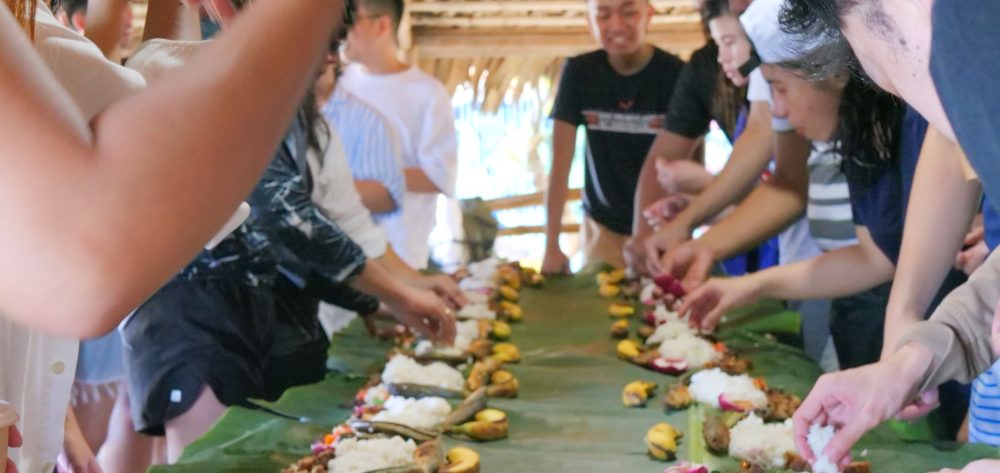
The success of this activity would not have been possible without the enthusiasm and dedication of the fifteen CHIYODA Philippines eco-warriors, whose determination, positive spirit, and cheerful camaraderie made the day both productive and memorable. Their willingness to contribute their time and energy for environmental conservation reflects the growing role of corporate volunteers in protecting the country’s natural resources. FEED also extends its heartfelt gratitude to the local community, especially the hardworking women who lovingly prepared the freshly cooked lunch that energized everyone after the planting activity. Special appreciation is likewise given to the Forest Guardians for safeguarding the restoration site, to Forester Rey Lorida for his invaluable technical guidance, and to Ms. Rose Bocado for successfully facilitating and coordinating the entire event.

As CHIYODA Philippines continues its partnership with FEED, each succeeding tree-planting activity strengthens a shared commitment to environmental restoration and sustainable development. The successful planting of 200 native Philippine trees is more than a numerical achievement—it represents hope, resilience, and a long-term investment in healthier forests, safer watersheds, and stronger communities. Every volunteer who carried a seedling up the mountain became part of a larger movement dedicated to protecting the Sierra Madre, the country’s natural shield against floods, typhoons, and biodiversity loss.
Photo library:


About Chiyoda Philippines Corporation
Providing Global Engineering Service
 Chiyoda Philippines Corporation (CPh), is a wholly owned subsidiary of Chiyoda Corporation (Yokohama, Japan), one of the largest engineering and construction companies in the world.
We are primarily engaged in engineering design serving the requirements of Chiyoda Corporation, presently undertaking Engineering, Procurement, Construction and other related works of various plants facilities mainly gas processing, petroleum refining and petrochemical plants and facilities. With a wealth of experience in the field of business, CPh has become a competitive engineering service contractor that led to the development of refinery and other related projects in the country.
More details here: https://chiyodaphil.com.ph
GPS Coordinates & Photos of Planting Site
Use any GPS (Global Positioning System) software / applications to input the latitude and longitude coordinates to be able to remotely see the location of your trees planted. Some examples include:
- https://www.gps-coordinates.net/
- https://gps-coordinates.org
- https://www.maps.ie/coordinates.htmlhttp://www.mapcoordinates.net/en

Tree-Nurturing Program with FEED
Immerse yourself in nature and explore our Tree-Nurturing Program in Siniloan, Laguna, nestled within the Sierra Madre Mountain Ranges. Witness the untouched beauty of Mother Nature—watch this video for a glimpse of the experience.