 Last November 8, 2025, the Laguna Quezon Land Grant welcomed the day with an unusually calm and radiant morning. As the cool air of the holiday season began to settle across the country, participants were greeted by clear skies and a gentle breeze—conditions that stood in stark contrast to the Sierra Madre’s typical mountainous microclimate. In these elevations, weather patterns are often unpredictable, characterized by sudden rains, dense fog, and strong winds caused by rapid changes in temperature, altitude, and terrain. Such “micro weather” systems are common in mountain ranges, where localized atmospheric conditions shift quickly, shaping both the challenges and resilience of life in these environments. Yet on this day, nature offered a rare window of calm—an ideal setting for meaningful environmental action.
Amid this backdrop, 150 passionate participants and volunteers from Henkel gathered with determination and shared purpose: to give back to nature. United as eco-warriors, they successfully planted 3,000 seedlings of Philippine native trees, including 700 Maraluhat, 130 Bani, 100 Santol, 270 Kalumpit, 300 Lipote, 900 Kupang, and 600 Batino. Each seedling represented not just a tree, but a step toward ecological restoration and climate resilience.


 Native Philippine trees are species that have naturally evolved in the country over thousands of years, adapting to its unique climate, soil conditions, and biodiversity. These trees play a vital role in maintaining ecological balance, as they support native wildlife, enhance soil fertility, and regulate water systems. Unlike introduced or exotic species, native trees are better suited to local conditions—they require less maintenance, are more resilient to pests and diseases, and integrate seamlessly into existing ecosystems. Planting endemic trees ensures that restoration efforts are sustainable and beneficial in the long term, preserving the natural identity of Philippine forests while strengthening their ability to recover and thrive.

 The importance of planting native species extends beyond biodiversity. These trees help stabilize slopes, prevent soil erosion, and improve water infiltration—critical functions in mountainous regions like the Sierra Madre. Their root systems bind the soil together, reducing the risk of landslides, while their canopies regulate temperature and humidity. In a country frequently affected by typhoons and heavy rainfall, restoring forests with native species becomes a natural defense system. Ultimately, these efforts contribute to healthier ecosystems that support both wildlife and human communities.
 Forester Rey Lorida delivered an insightful talk on the long and complex history of illegal logging in the Philippines. He explained that illegal logging has persisted for decades, driven by economic pressures, weak enforcement of environmental laws, and high demand for timber. This practice has led to widespread deforestation, loss of biodiversity, and increased vulnerability to natural disasters such as floods and landslides. He emphasized that forests are not just sources of timber, but living systems that protect watersheds, regulate climate, and sustain livelihoods. Without proper forest management, the ecological balance is disrupted, affecting both upland and lowland communities. Addressing illegal logging requires a collective effort—from stricter law enforcement to stronger community involvement. Education and awareness, he noted, are key to changing mindsets and promoting long-term stewardship of natural resources.
He further highlighted that restarting and restoring forests is not simply about planting trees, but about rebuilding ecosystems and empowering communities. Sustainable forestry practices must be prioritized, ensuring that reforestation efforts align with ecological principles. Community-based forest management can play a crucial role, giving local residents a sense of ownership and responsibility over their environment. By providing alternative livelihoods, communities are less likely to engage in destructive practices such as illegal logging. Partnerships between organizations, government agencies, and local stakeholders are essential to ensure long-term success. He stressed that restoring forests is a continuous process that requires patience, commitment, and collaboration. Ultimately, the goal is to create a system where both people and forests can coexist and thrive.


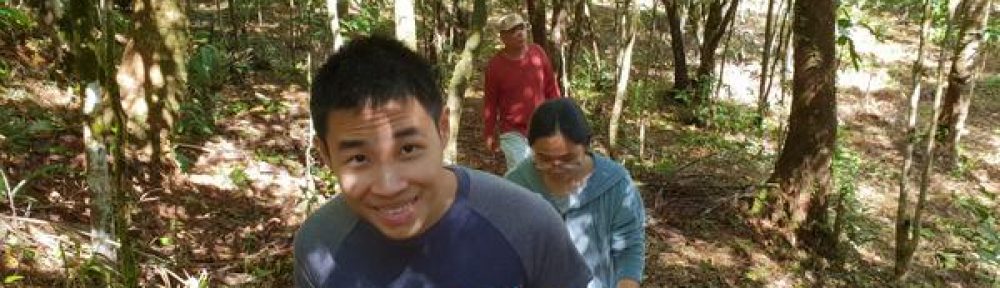
 Before the group began their trek to the planting sites, participants engaged in a morning exercise session led by Rose Bocado of the Laguna Quezon Land Grant, energizing everyone for the day ahead. The program officially opened with a message from Anne Marie Bakker of FEED, who highlighted the vision behind the Ridge to Reef Program. This initiative focuses on restoring forest landscapes using Philippine native trees to reduce flood risks and stabilize vulnerable slopes. By rehabilitating upland forests, the program improves soil structure and water absorption, which significantly reduces the volume and speed of runoff during heavy rains. These upstream interventions directly benefit downstream communities, minimizing flooding in coastal and lowland areas.
Beyond the uplands, the program extends to coastal ecosystems through mangrove planting and coral restoration, recognizing the deep interconnection between land and sea. Healthy mangroves act as natural buffers against storm surges, while coral reefs support marine biodiversity and fisheries. This integrated approach ensures that ecosystems—from mountain ridges to ocean reefs—are protected and strengthened as one continuous system. Moreover, the program supports local communities by providing alternative livelihoods, such as nursery management, site maintenance, and event facilitation. Over time, these opportunities empower residents to become independent stewards and facilitators of environmental initiatives. The Ridge to Reef Program is not just about restoring nature—it is about building resilient communities and sustainable futures.
 Central to this effort is the “Tree Nurturing Program,” which emphasizes the critical role of the Sierra Madre as the country’s natural shield against powerful typhoons. As the longest mountain range in the Philippines, it serves as a barrier that weakens incoming storms, protecting inland communities from severe impacts. However, deforestation has significantly reduced this protective function, making restoration efforts more urgent than ever. In the face of climate change, strengthening forest cover is essential to enhancing resilience and mitigating disaster risks. By nurturing trees and ensuring their survival, we reinforce this natural defense system for future generations.
 The success of this initiative would not have been possible without the unwavering dedication of Henkel’s eco-warriors, whose energy and commitment brought the event to life. Heartfelt thanks go to the local community, especially the women who prepared a warm and generous meal for everyone. Gratitude is also extended to the Forest Guardians, Forester Rey Lorida, and Ms. Rose Bocado for their guidance and support throughout the activity. FEED, with its partners in the Laguna Quezon Land Grant and the University of the Philippines Los Baños, looks forward to many more years of meaningful collaboration. Together, these collective efforts continue to plant not just trees—but hope, resilience, and a greener future for all.
Photo Library:


About Henkel & Corporate Citizenship
 At Henkel, Corporate citizenship is our way of “Making society future-fit”. Our activities are designed to empower people through education to obtain the skills and competencies needed to develop innovative ideas, sustainable behaviors, and new digital solutions that will put them in a position to master future challenges and capitalize on opportunities. Together with our employees, pensioners, customers, consumers, partners and charitable organizations, we are committed to making a lasting contribution to society worldwide, above and beyond our business activities. We work together to actively contribute to social progress and give back to our communities contributions that improve our society and adhere to our purpose and corporate values.
Deeply embedded in our corporate culture is the drive and character of Corporate Citizenship to go beyond our core daily business and make a voluntary social commitment. With these efforts, we are letting our communities know with more than words that we are Pioneers at Heart for the Good of Generations.
Henkel’s commitment is based on three pillars: volunteer engagement by our employees, partnerships with charitable organizations, and emergency aid with focus on natural disasters and pandemics. Discover the three areas in which we organize our engagement.
For more details, visit: Henkel.com
GPS Coordinates & Photos of Planting Site
Use any GPS (Global Positioning System) software / applications to input the latitude and longitude coordinates to be able to remotely see the location of your trees planted. Some examples include:

Tree-Nurturing Program with FEED
Immerse yourself in nature and explore our Tree-Nurturing Program in Siniloan, Laguna, nestled within the Sierra Madre Mountain Ranges. Witness the untouched beauty of Mother Nature—watch this video for a glimpse of the experience.