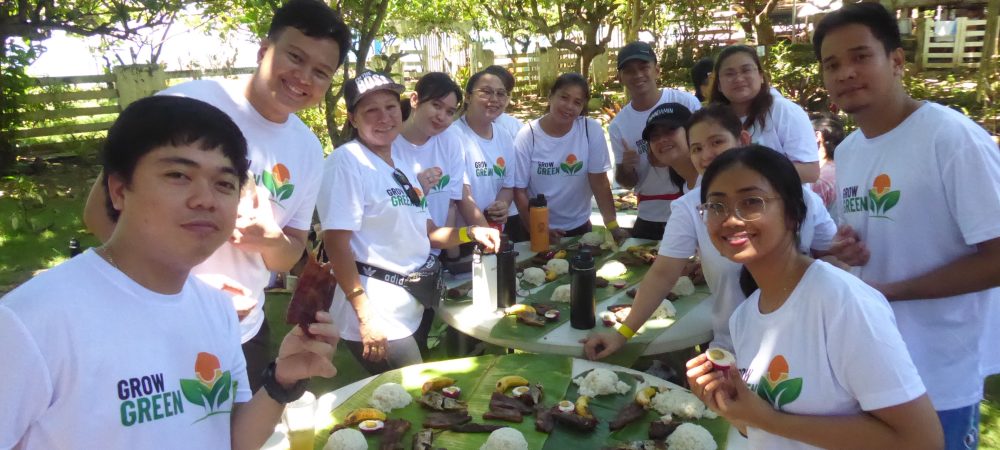
 06 May 2025, UP Laguna Quezon Land Grant, Siniloan, Laguna. The Dutch Chamber of Commerce in the Philippines (DCCP) has generously sponsored the planting of 480 native trees in the Sierra Madre mountain range, made possible by the funds raised during the DCCP’s 3rd Orange Cup Golf Tournament held at the Hallow Ridge Golf Club in San Pedro, Laguna last November 2024 – proceeds of which are typically donated to a Charity close to the Chamber’s objectives.
“We are happy and grateful to be able to contribute to a cause close to the Dutch-Filipino community that preserves the beauty and ecosystems of the Philippine islands.” Mitchel Smolder, Executive Director, DCCP
The trees were planted within FEED’s longest Living Legacy partner site, the over 9,000 hectares managed by University of the Philippines Los Baños (UPLB) – Laguna-Quezon Land Grant, a critical watershed and biodiversity corridor, part of the longest mountain range in the country, the Sierra Madres.
 This initiative forms part of FEED’s community- and development-centered “Ridge to REEForestation” (R2R) program, which aims to restore forest ecosystems while uplifting the livelihoods, water and food security and sustainability of local forestry proponents and their futures.
Native Philippine upland tree species planted were 240 Malaruhat and 240 Kupang.

Malaruhat (Syzygium nervosum), also known as Daly river satinash, is a tree with various potential medicinal benefits, including anticancer, antigout, antioxidant, antidiabetic, and anti-inflammatory properties. In traditional medicine, it’s used for conditions like influenza, skin diseases, digestive issues, diarrhea, and abdominal pain. The leaves and flower buds are also used for stomachic properties. The bark and wood have high antioxidant capacity, with the bark and branch wood of narra (another Syzygium species) confirmed to have the highest Oxygen Radical Absorbance Capacity (ORAC) in the Philippines – according to the Philippine News Agency.
 Benefits of Malaruhat (Syzygium nervosum)

- Anticancer and Antigout: Studies suggest that malaruhat has potential anticancer and antigout properties.
- Antioxidant: The bark and wood, especially of narra (a related Syzygium species), are rich in antioxidants, which help protect the body from damage caused by free radicals, according to the Philippine News Agency.
- Antidiabetic and Anti-inflammatory: Malaruhat may have antidiabetic and anti-inflammatory properties, as noted by StuartXchange.
- Traditional Uses: Leaves and flower buds are used for conditions like influenza, skin diseases, digestive problems, diarrhea, and abdominal pain.
- Used externally for inflammatory conditions, bruises, acne, and skin ulcers.
- Herbal tea made from leaves and buds is used for stomachic properties.
- Other potential uses: The bark can be used for dyeing clothes (reddish-brown or black) and toughening fishing nets, according to the IUCN Red List.
- The wood is used for construction, furniture, and other purposes
Kupang (Parkia timoriana), is a native Philippine tree that offers several benefits, particularly in the context of reforestation and soil improvement. It’s a good choice for reforestation due to its tolerance to full sunlight and ability to fix nitrogen in the soil, acting as a “nurse tree” for other species. Additionally, the plant has been used traditionally for various medicinal purposes and can be used to make dye.
 Benefits of Kupang (Parkia timoriana):
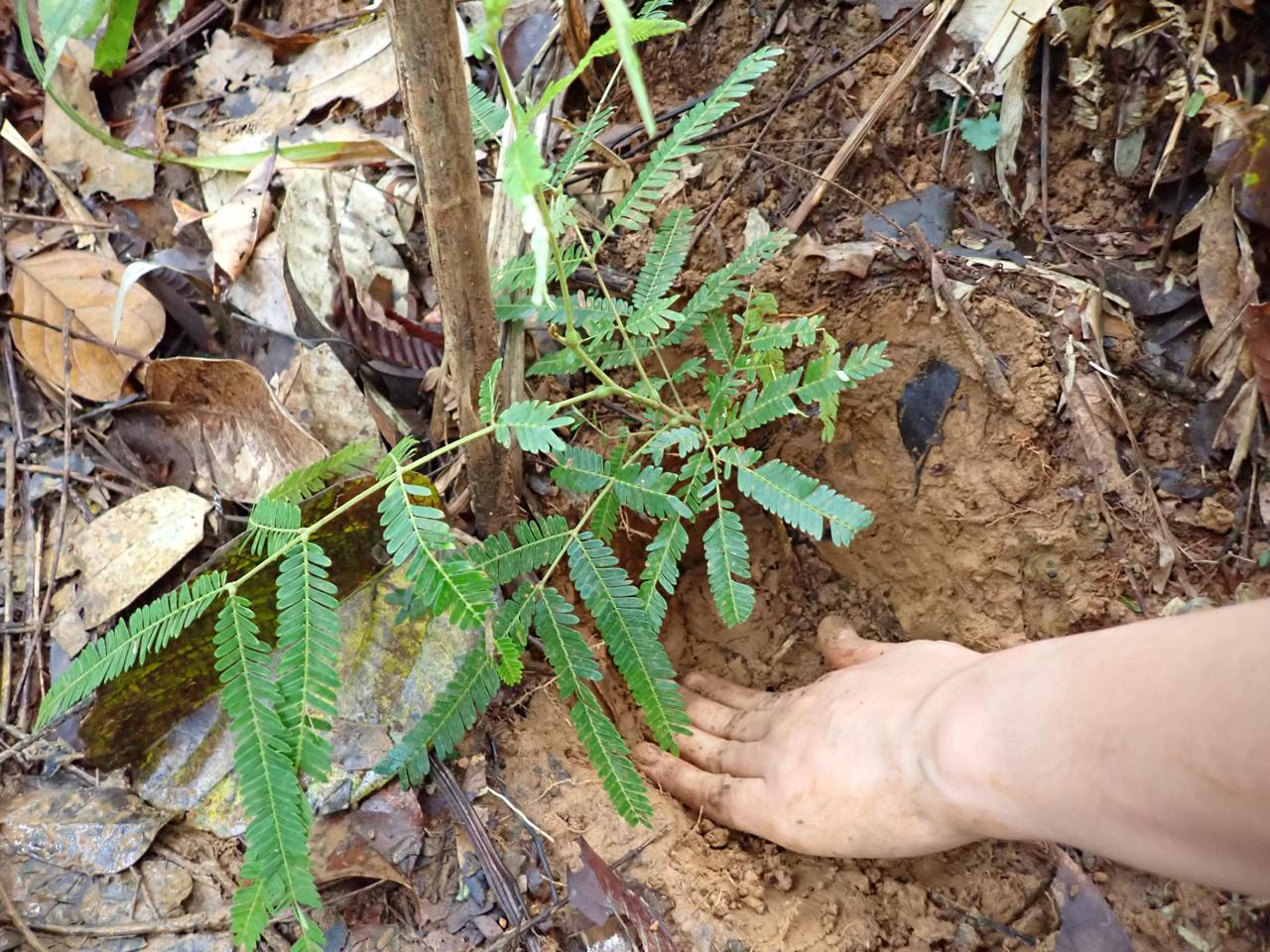
- Reforestation: Highly tolerant of full sun exposure, making it ideal for areas with high sunlight.
- Soil Improvement: A leguminous tree, meaning it harbors bacteria in its roots that fix nitrogen, enriching the soil and improving fertility.
- Medicinal Uses: Traditionally used for various ailments, including abdominal pain, bleeding hemorrhoids, diarrhea, and dysentery.
- Dye: The fruit peel can be used to create a brown/black dye for fabrics.
- Other potential benefits: Some studies suggest antibacterial, hemagglutinating, anticancer, antileishmanial, and anti-biofilm properties.
- Ecosystem services: Kupang can provide shade and habitat for other plants and animals, contributing to biodiversity.
- Economic benefits: The seeds and pods can be used for food and medicine, providing a source of income for local communities
References:
- StuartXchange: Provides information on the plant Parkia javanica (Kupang), including its medicinal properties and uses.
The 480 strong DCCP forest was enabled by the regular UPLB forest rangers team, thank you!
| Randy Velina | Elmer Dayandante |
| Jun Jun Nieva | Shirley Matin-ao |
| Roger Glipo | Teofilo Breganza |
| Joel Velina | Rose Bocado |
| Ernie Ortega | Ariel Atip |
| Romil Salino | John Kyle Rumaraog |
| Gilbert Ryan Ella | Revile Rumaraog |
| Renato De Leon | Darwin Bacasen |
| Maria Salipot | Diosdado Nebril |
 FEED expressed its deep appreciation for the DCCP’s donation, which supports the livelihoods of local farmers and forest guards who maintain and monitor the reforested land. “This sponsorship not only helps restore our forests but directly benefits the people who protect them every day,” said Forester Reynaldo Lorida, who heads up the Laguna Quezon Land Grant. “It’s a win for both nature and community.”

Having completed the initial culinary training at UPLB last March 2025, as part of their livelihood skills upgrading, planter Shirley Matin-ao (pictured above) said:
“Ang pakikisali namin sa mga alternatibong programang pangkabuhayan bilang mga nakatira malapit sa Land Grant, ay nagbibigay dean sa amin para palawakin ang aming mga kakayahan gaya lamang ng hospitality training, culinary, pati na ren sa pagpapasibol ng mga binhi, at pag tatanim ng mga puno. Ang mga oportunidad na ito ay napakalaking tulong sa amin para lalong magsumikap sa buhay, na pati ang mga kapitbahay namin sa aming purok ay nahikayat na rin sumali sa aming mga pagsisikap.” (Tr. “Our participation in alternative livelihood programs as residents of the Land Grant, has given us the opportunity to expand our skills such as hospitality training, culinary, as well as seed germination, and tree planting. These opportunities have been a great help to us in our efforts to make a living, and our neighbors in our area have also been encouraged to join our efforts.”)
Tree planting plays a vital role in restoring biodiversity, supporting native flora and fauna, and safeguarding natural habitats. Healthy forests contribute to cleaner air, richer soil, and better watershed management—helping secure water and food for communities both upstream and downstream.
As the Philippines faces increasing environmental and climate-related challenges, initiatives like this reinforce the importance of collaborative efforts between the private sector and grassroots organizations in building long-term ecological resilience.
PHOTO/VIDEO ARCHIVE


GPS Coordinates of DCCP Planting Site: 14°29’8″N, 121°31’0″E
Use Google Earth or any other readily available application/tool/website to input the latitude and longitude coordinates to access and view the forest location by satellite.

Taking Climate Change Action through Community-Based Reforestation
Community-based reforestation is a vital climate action strategy in the Philippines, where forests play a critical role in mitigating climate change and enhancing local resilience. By involving local stakeholders—particularly upland farmers, indigenous peoples, and grassroots organizations—these programs not only restore degraded lands but also promote social equity and environmental stewardship. Research shows that forests in Southeast Asia can sequester significant amounts of carbon, and when communities are actively involved, reforestation projects tend to be more sustainable and impactful (Lasco et al., 2010; FAO, 2016).
In the Philippine context, localized efforts by many NGOs demonstrate how integrating livelihood development with ecological restoration can lead to more inclusive climate solutions (DENR, 2020). By empowering communities to become stewards of reforested areas, these projects contribute to long-term climate resilience, biodiversity conservation, and improved watershed health for all life.
References:
- Lasco, R. D., Pulhin, F. B., & Sanchez, P. A. (2010). Climate change and forest ecosystems in the Philippines: Vulnerability, adaptation and mitigation. Journal of Environmental Science and Management, 13(1), 1–13.
- Food and Agriculture Organization of the United Nations (FAO). (2016). Forests and Climate Change Working Paper 12: Community-based forest management and REDD+.
- Department of Environment and Natural Resources (DENR). (2020). The Expanded National Greening Program: A Review of Progress and Lessons Learned.
About DCCP
 The Dutch Chamber of Commerce in the Philippines (DCCP) is the official representation of the Netherlands-Philippine Business Community.
From its origins as a Business Council, the DCCP was established in 2018 to be the official representation of the Netherlands-Philippine Business Community. As such, we work hard to fulfill our vision, namely “to be the gateway to the Philippines and to serve as a platform for the Philippines-Netherlands business community with the goal of facilitating easy access for our members.”
The Chamber supports entrepreneurs and businesses who are ready to expand to a new market, working closely together with the Netherlands Embassy in the Philippines, offering networking opportunities with well-established companies in the country, and business services either in-house or through select trusted partners, and to keep members up to date of market developments and trends.
DCCP partners in the Netherlands include NLinbusiness, RVO, and others while in Brussels the Philippine Trade and Investment Center. DCCP is also a member of the ASEAN-Dutch Chamber Network, a platform of Chambers in South-East Asia.
If you are a local investor interested in investing in the Netherlands please check DCCP’s Netherlands-Doing Business section for access to government agencies and other sources.
For more details, see: https://www.dccp.ph/
Tree-Nurturing Program with FEED
Immerse yourself in nature and explore our Tree-Nurturing Program in Siniloan, Laguna, nestled within the Sierra Madre Mountain Ranges. Witness the untouched beauty of Mother Nature—watch this video for a glimpse of the experience.
CONTACT FEED
In 2015, the Philippine government submitted to the United Nations the country’s commitments to reduce greenhouse gas emissions. The country committed to reduce its carbon emissions by 70 percent by 2030. The carbon dioxide reductions will come from the sectors of energy, transport, waste, forestry and industry.

FEED runs a number of Students and Volunteers for the Environment (SAVE); Corporate Social Responsibility (CSR) – such as mangrove planting for coastal protection or ridge reforestation plantings; One Child, One Tree; Bio-Intensive Gardens (BIG) for nutrition in public elementary schools and other spaces; Climate Change Survival 101 and other LIVING LEGACY programs – customised environmental engagement activities for individuals and organisations interested in contributing to climate change adaptation efforts and greening critical areas such as watersheds, ridges, and reefs that all require rehabilitation.
Join us! Help us reverse the Earth’s “hothouse climate” tipping point. Email: info@feed.org.ph or text/call +63 (0)917 552 4722.