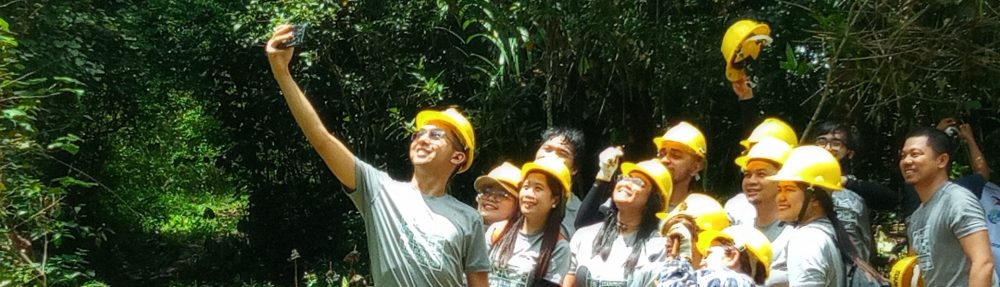

On June 2, 2024, the sun shone brightly over the Sierra Madre Mountains in Siniloan, Laguna, as SMEC Philippines in partnership with FEED and UP Laguna Quezon Land Grant organized a family day dedicated to environmental stewardship. This fine weather was a pleasant contrast to the typical micro weather in the mountains, where rain and strong winds are often expected due to the area’s unique topography. Micro weather in mountainous regions like the Sierra Madre is characterized by rapid changes in atmospheric conditions, influenced by elevation and landscape features, leading to localized weather patterns that can differ dramatically within short distances. These conditions can pose challenges to reforestation efforts, as they affect soil moisture, temperature, and wind exposure, all of which are critical to the survival of newly planted trees.

 Planting native Philippine trees is essential for maintaining the ecological balance and biodiversity unique to the country. Native species, such as Wild Rambutan, Marang, and Katmon, have evolved to thrive in the specific conditions of their local environments, making them more resilient and better suited to supporting the intricate web of life that depends on them. These trees play a critical role in preventing soil erosion, maintaining the health of watersheds, and providing habitat for various wildlife species. By planting endemic trees, we also protect the genetic diversity that is crucial for the adaptability and resilience of ecosystems in the face of climate change. Furthermore, native trees are vital for carbon sequestration, helping to mitigate the effects of global warming by absorbing carbon dioxide from the atmosphere. Reforestation with native trees is, therefore, a key strategy in preserving the natural heritage of the Philippines and ensuring the sustainability of its ecosystems. The participants successfully planted 600 native Philippine trees composed of 120 Wild Rambutan, 120 Marang, 70 Akdang, 50 Malasantol, 120 Katmon and 120 Kuling Baboy.


 The Ridge to Reef program is a holistic environmental conservation initiative that addresses the interconnectedness of ecosystems from mountainous regions to coastal areas. By focusing on reforestation in upland areas, the program enhances soil stability, reduces erosion, and increases water absorption, which collectively contribute to a significant reduction in flood risks for downstream communities. Additionally, the program emphasizes the restoration of coastal ecosystems through the planting of mangroves and corals, which serve as natural barriers against storm surges and support marine biodiversity. This integrated approach ensures that both terrestrial and marine environments are protected, creating a sustainable balance that benefits both nature and human communities. The Ridge to Reef program also aims to empower local communities by providing them with alternative livelihoods, such as sustainable agriculture and eco-tourism, fostering a sense of ownership and responsibility for the environment. By training residents to become independent facilitators of environmental restoration efforts, the program ensures the long-term success and sustainability of its initiatives.


 Forester Rey Lorida introduced the concept of mutual recovery, emphasizing that the health of nature and human well-being are deeply interconnected. When we take care of the environment, it, in turn, provides us with the resources and stability needed for our survival. This symbiotic relationship highlights the importance of collective action in conservation efforts, where the contributions of individuals and communities can lead to significant positive impacts. The event also underscored the role of the Sierra Madre Mountains as a natural barrier against typhoons, absorbing the brunt of strong winds and heavy rains, thus protecting the densely populated areas of Luzon. As climate change intensifies, the preservation of these forests becomes even more critical in safeguarding communities from increasingly severe weather events.


 Illegal logging has been a significant issue in the Philippines for decades, leading to widespread deforestation and environmental degradation. The Sierra Madre, in particular, has been heavily impacted by illegal logging activities, which have not only reduced forest cover but also weakened the natural defenses against typhoons and floods. Reforestation efforts, such as those undertaken by SMEC Philippines, are vital in reversing this damage and restoring the ecological balance. However, addressing illegal logging requires a comprehensive approach that includes stricter enforcement of environmental laws, community education, and the promotion of sustainable livelihoods. Teaching children about the importance of protecting and preserving forests is a key component of this strategy. By instilling environmental values at a young age, we ensure that future generations will continue to advocate for the conservation of our natural resources.


 A warm thank you to the entire SMEC Philippines family of eco-warriors for their unwavering commitment to environmental conservation. We also extend our gratitude to the local community, especially the ladies who prepared a delicious lunch for the event. Special thanks to the Forest Guardians from the local community, Forester Rey Lorida, and Ms. Rose Bocado for their invaluable assistance in making this event a success. Through collective action, we are making a lasting impact on the environment, ensuring a greener and healthier planet for future generations.

Photo Library:


GPS Coordinates & Photos of Planting Site
Use any GPS (Global Positioning System) software / applications to input the latitude and longitude coordinates to be able to remotely see the location of your trees planted. Some examples include:
- https://www.gps-coordinates.net/
- https://gps-coordinates.org
- https://www.maps.ie/coordinates.htmlhttp://www.mapcoordinates.net/en
CONTACT FEED
In 2015, the Philippine government submitted to the United Nations the country’s commitments to reduce greenhouse gas emissions. The country committed to reduce its carbon emissions by 70 percent by 2030. The carbon dioxide reductions will come from the sectors of energy, transport, waste, forestry and industry.

FEED runs a number of Students and Volunteers for the Environment (SAVE); Corporate Social Responsibility (CSR) – such as mangrove planting for coastal protection or ridge reforestation plantings; One Child, One Tree; Bio-Intensive Gardens (BIG) for nutrition in public elementary schools and other spaces; Climate Change Survival 101 and other LIVING LEGACY programs – customised environmental engagement activities for individuals and organisations interested in contributing to climate change adaptation efforts and greening critical areas such as watersheds, ridges, and reefs that all require rehabilitation.
Join us! Help us reverse the Earth’s “hothouse climate” tipping point.
Tree-Planting with FEED
Check out the video journey by Clueless Commuter who planted with us last 24th of June 2017 to get a good idea of how FEED plantings go: https://youtu.be/KROn4rjVqBg

Contact us at FEED for more details, to join our regular activities or to design your own tree-nurturing event: info@feed.org.ph or call/text +63 (0)917 552 4722.
© Fostering Education & Environment for Development, Inc.