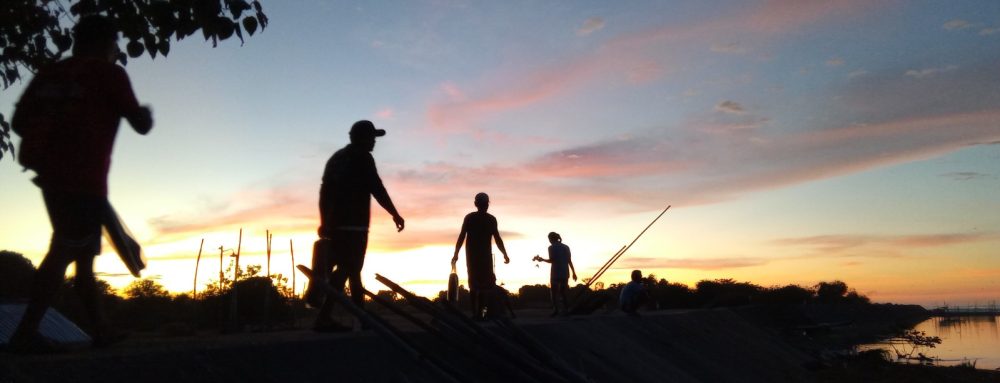
On April 18th, 2024, a beautiful morning in Siniloan, Laguna, at the foot of the Sierra Madre Mountain Ranges, brought together a community of eco-warriors dedicated to protecting the environment. The event, organized by UP Laguna Quezon Land Grant and FEED, Inc., and supported by the local community, aimed to raise awareness about the importance of reforestation and the role of native trees in maintaining ecological balance.
Forester Reynaldo Lorida, Manager of the Laguna Quezon Land Grant, kicked off the event with an inspiring speech. He emphasized the critical role of reforestation in combating climate change and protecting communities from natural disasters. “What we do today is important because it helps keep us safe in the future,” he said. His words resonated with the participants, setting a serious and determined tone for the day’s activities.
Before the tree planting began, Diane Penales from FEED, Inc. led a morning exercise routine. This warm-up session energized the participants and prepared them physically for the trek and tasks ahead.


The participants foster a sense of camaraderie and shared purpose as they head to the planting site. With great interest, the participants set out and planted 1,860 native trees, including Marang, Apitong, Lipote and Calumpit species. These trees were carefully chosen for their suitability to the local climate and soil conditions. Each participant, equipped with organic gardening tools and guided by experienced foresters, planted thousands of trees and the forest guardians will continue to monitor the planted seedlings as they grow. The atmosphere was filled with excitement and hope, as everyone understood the significance of their actions.


The Importance of Sierra Madre
The Sierra Madre Mountain Ranges serve as a natural barrier against strong typhoons, protecting lowland areas from severe weather. This protection is increasingly vital as climate change intensifies the frequency and severity of typhoons. Reforestation in these areas helps maintain this natural barrier, ensuring it continues to function effectively. Preserving the Sierra Madre is not just about protecting the environment; it’s also about safeguarding the communities that rely on this natural defense.
The mountains are home to diverse flora and fauna, many of which are endemic to the Philippines. By reforesting these areas, we are not only protecting human lives but also preserving biodiversity. The native trees planted during the event will grow to become part of this rich ecosystem, providing habitat and food for various wildlife species.


Special thanks go to the local community and participants, especially the ladies who prepared a delicious and hearty lunch that nourished everyone after the hard work. The Forest Guardians from the local community, Forester Rey Lorida, and Ms. Rose Bocado played pivotal roles in organizing and facilitating the event. Their dedication and hard work ensured the success of the tree planting activity.
We look forward to more meaningful partnerships and activities in the future. Events like this not only contribute to environmental conservation but also build stronger, more resilient communities. As we continue to face the challenges posed by climate change, it is heartening to see such a strong commitment to protecting our natural resources. Together, we can make a difference, one tree at a time.


Promoting Sustainable Livelihoods
CBF initiatives in the Philippines prioritize the promotion of sustainable livelihoods for forest-dependent communities. By diversifying income-generating activities such as agroforestry, eco-tourism, non-timber forest product (NTFP) harvesting, and community-based enterprises, CBF not only reduces dependence on forest resources but also improves socio-economic resilience. These initiatives are often complemented by capacity-building programs and technical assistance to enhance the skills and knowledge of community members.
Enhancing Ecosystem Resilience
In addition to socio-economic benefits, community-based forestry contributes to the conservation and restoration of forest ecosystems. By implementing sustainable forest management practices, including reforestation, watershed protection, and biodiversity conservation measures, communities play a vital role in enhancing ecosystem resilience and mitigating the impacts of climate change. Furthermore, indigenous knowledge and traditional practices are integrated into forest management plans, ensuring the preservation of cultural heritage and biological diversity.
Challenges and Opportunities
Despite the progress made, community-based forestry in the Philippines still faces challenges such as limited access to resources, insecure land tenure, conflicting land uses, and inadequate support from government agencies. However, there are also opportunities for innovation and collaboration. Strengthening partnerships between government, civil society, academia, and the private sector can help address these challenges and scale up successful CBF models.
Looking Ahead
As we look to the future, community-based forestry holds immense potential for fostering sustainable development and environmental stewardship in the Philippines. By recognizing the rights of indigenous peoples and local communities, promoting participatory decision-making processes, and integrating traditional knowledge with modern science, CBF can pave the way for inclusive and resilient forest management practices that benefit both people and the planet.
Community-based forestry is not just about managing forests; it’s about nurturing relationships between people and nature, fostering a sense of belonging, and building a brighter future for generations to come.
References:
- DENR. (Department of Environment and Natural Resources). (2022). Community-Based Forest Management.
- World Agroforestry (ICRAF). (2022). Community-Based Forest Management in the Philippines.
- USAID Philippines. (2022). Philippines Sustainable Forest Management Project.
Catholic Relief Services (CRS). (2022). Community-Based Forest Management.
On Carbon Sequestration and Planting
Storing carbon is only one of the ways that trees could affect climate, says Cat Scott, an atmospheric scientist at the University of Leeds in England who was not involved in the research. Just how these other factors play off each other is not yet clear. She and colleagues have developed computer simulations of trees contributing to cooling a landscape by releasing airborne molecules that invite clouds to form.
Even something as simple as the darkness of tree leaves can change how much heat a landscape absorbs or reflects. Expanding forests into formerly snow-bright, reflective zones, for instance, might warm them. In the tropics, however, the enhanced cooling from clouds might be the more powerful effect.
Ultimately, in the struggle against climate change, such heroic tree planting merely “buys us time,” says study coauthor Jean-François Bastin, also an ecologist at ETH Zurich. But that’s time human societies could use to stop emitting greenhouse gases, the real solution to climate change, he says.
Source: https://www.sciencenews.org/article/planting-trees-could-buy-more-time-fight-climate-change-thought
CONTACT FEED
In 2015, the Philippine government submitted to the United Nations the country’s commitments to reduce greenhouse gas emissions. The country committed to reduce its carbon emissions by 70 percent by 2030. The carbon dioxide reductions will come from the sectors of energy, transport, waste, forestry and industry.

FEED runs a number of Students and Volunteers for the Environment (SAVE); Corporate Social Responsibility (CSR) – such as mangrove planting for coastal protection or ridge reforestation plantings; One Child, One Tree; Bio-Intensive Gardens (BIG) for nutrition in public elementary schools and other spaces; Climate Change Survival 101 and other LIVING LEGACY programs – customised environmental engagement activities for individuals and organisations interested in contributing to climate change adaptation efforts and greening critical areas such as watersheds, ridges, and reefs that all require rehabilitation.
Join us! Help us reverse the Earth’s “hothouse climate” tipping point.
Tree-Planting with FEED
Check out the video journey by Clueless Commuter who planted with us last 24th of June 2017 to get a good idea of how FEED plantings go: https://youtu.be/KROn4rjVqBg

Contact us at FEED for more details, to join our regular activities or to design your own tree-nurturing event: info@feed.org.ph or call/text +63 (0)917 552 4722.
© Fostering Education & Environment for Development, Inc.