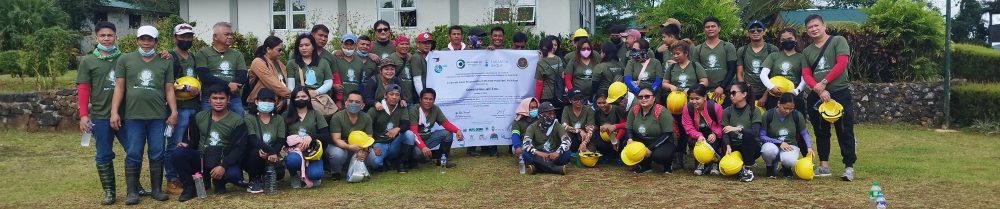
 In a shared pursuit of protecting and restoring marine ecosystems, FEED, together with the Jongky Surf School team, recently participated in a comprehensive freediving workshop held in one of community partners in La Union, Urbizgarden Bed and Breakfast of Ms. Tina Antonio-Schmidtz. The training was spearheaded by Coach Michaelangelo Maglaque, alongside Coach Cha Padua, with the invaluable support of Safety Officer Coach Jenny Ozoa from Freediving Coaches of Asia (FCOA). Sponsored by FEED, the initiative was designed to equip participants—ranging from local partners to community members—with essential freediving knowledge and skills that can directly support coral propagation efforts and foster a deeper connection with the ocean.
At its core, the workshop aimed to build confidence and competence in open water environments. Beyond simply learning how to dive, participants were introduced to the discipline and mindfulness required to move efficiently and safely beneath the surface. For many, especially those who regularly work at sea, the experience was both familiar and transformative.
 Local fisherman like TJ Fietas brought years of traditional knowledge into the workshop. For them, freediving was not entirely new—but the introduction of modern techniques provided a new perspective. The training emphasized proper equalization methods, efficient breathing techniques, and safety-first approaches that complement, rather than replace, indigenous practices. These updated methods are grounded in scientific research and are designed to reduce risks, improve physical well-being, and ensure that diving practices can be sustainably passed down to future generations. In this way, the workshop served as a bridge between time-honored wisdom and contemporary safety standards.


 Over the course of two days, participants underwent a structured and immersive learning experience. The workshop began with an introduction to freediving, where they explored the physiology of breath-hold diving, proper breathing cycles, and relaxation techniques conducted on land before transitioning into the water. These inland breathing exercises focused on diaphragmatic control, oxygen conservation, and mental calmness—critical elements that directly influence underwater performance.

 Once in the water, participants applied these techniques in real conditions, gradually building their comfort and awareness beneath the surface. The training also covered basic “fix and navigation,” a crucial skill set for coral work and underwater operations. Participants learned how to identify natural and artificial markers, understand underwater terrain, and mentally map dive sites—skills essential for accurately locating coral propagation areas and ensuring efficient movement during restoration activities.


 Another key component of the workshop was ropework and safety rescue. This included setting up training lines, understanding depth markers, and practicing controlled descents and ascents. Participants were also trained in emergency response protocols, such as assisting a distressed diver, and executing proper rescue techniques. These lessons emphasized that safety is not an individual responsibility but a collective one—requiring awareness, communication, and trust among all members of a dive team.


 Despite the physically demanding conditions of La Union’s waters—known for their strong currents and surf—the team embraced the challenge wholeheartedly. Without surfboards and driven by a different purpose, they entered the ocean with a renewed sense of responsibility. Each dive became more than a skill exercise; it was a step toward becoming better stewards of the marine environment.
Beyond the technical skills, one of the takeaways from the workshop was a lesson that could not be found in manuals or training guides. Participants were reminded that each individual carries unique experiences and perspectives shaped by their personal journeys. Some may have more time in the water, others more theoretical knowledge—but no single path defines expertise. Learning, in this context, became a shared and evolving process. The idea that “Eco, not ego” became a guiding principle throughout the training. It underscored the importance of humility, openness, and collective purpose. In a field where safety and environmental impact is the priority, setting aside ego allows individuals to listen, adapt, and grow. Acceptance of new knowledge, like the ocean itself, cannot be rushed—it comes at its own pace and requires a willingness to remain curious and receptive.

 The two-day workshop concluded, leaving participants not only with new technical capabilities but also with a strengthened sense of community and purpose. The knowledge gained will play a vital role in advancing FEED’s coral propagation programs and other marine conservation initiatives. Special recognition was given to Cristina Suyat, whose dedication and endurance stood out as she completed the workshop despite the demands of a busy work schedule. Her commitment exemplified the spirit of the program—showing that passion for environmental stewardship can thrive even amidst the challenges of everyday life.
 As the team moves forward, the lessons learned beneath the surface will continue to ripple outward—informing safer practices, strengthening partnerships, and ultimately contributing to the preservation of marine ecosystems. Through initiatives like this, FEED and its partners reaffirm that meaningful change begins with knowledge, collaboration, and the courage to dive deeper for a cause.
More photos from the workshop:


