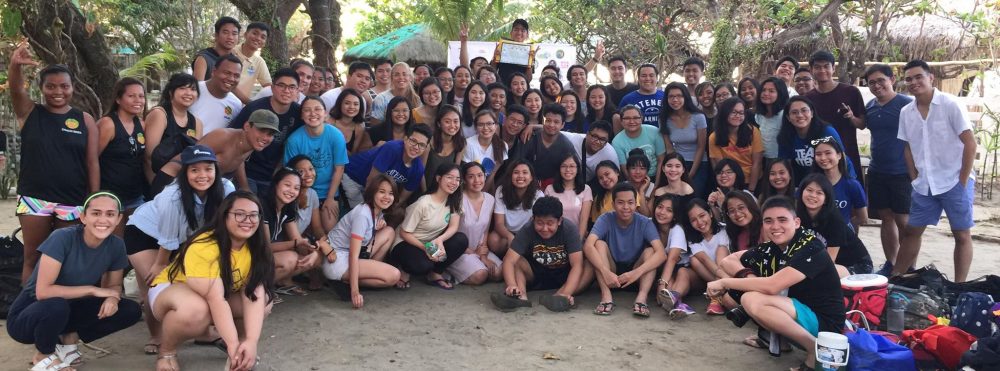
 On the bright morning of March 27, 2025, the Laguna Quezon Land Grant became a place of purpose and promise as eight passionate young volunteers from Xavier School took part in a vital ecological conservation effort under FEED’s SAVE Planting initiative. Though still in their formative years, these students exemplified the courage, concern, and commitment of a generation that refuses to stand by in the face of climate change. Their efforts reinforced the growing role of youth in environmental protection, proving that age is no barrier to making a meaningful impact.

 Together, they planted 250 native Philippine tree seedlings—150 Balitbitan and 100 Malaruhat—both known for their essential role in supporting native biodiversity and enhancing forest resilience. These indigenous species are deeply intertwined with the country’s ecological identity, providing food and shelter for wildlife, improving water retention, and preventing erosion and landslides in vulnerable upland regions. By participating in this reforestation effort, the students became part of a larger mission: to restore the natural balance of threatened ecosystems and protect communities from climate-related disasters.

 The event was made possible through FEED, Inc.’s SAVE (Students & Volunteers for the Environment) Planting initiative, which unites individuals and organizations from diverse backgrounds—including education, science, arts, and culture—toward one common goal: restoring life to degraded landscapes. SAVE Members support FEED, Inc. not only through planting and coral restoration but also by raising awareness and contributing time, talent, and resources to sustain environmental advocacy. These members serve as mentors and role models, but the participation of young students like those from Xavier School affirms that the future of environmental leadership is already here, rooted in youthful action and concern.
Aligned with FEED, Inc.’s Ridge to Reef strategy, this initiative connects reforestation in upland forests with mangrove rehabilitation and coral restoration in coastal areas, forming a complete ecosystem restoration model. By planting trees in the mountains, young volunteers also contribute to protecting reefs and fisheries downstream, showcasing the interdependence of natural systems. The program empowers local communities while fostering climate resilience, and this intergenerational cooperation between seasoned environmentalists and student volunteers strengthens both environmental and social structures.
The activity also highlighted the Sierra Madre’s role as Luzon’s first line of defense against typhoons. As part of the ongoing “Tree Nurturing Program,” the planting emphasized the importance of safeguarding this critical mountain range, which weakens storm intensity and protects millions from disaster. In a world facing increasingly severe weather events, these students are helping rebuild one of the country’s most important climate buffers—not just planting trees, but planting security and sustainability.
 Sir Allan Libarnes of the Forest Guards underscored a persistent threat: illegal logging, which continues to erode the gains made by reforestation programs. He called for stronger law enforcement, alternative livelihoods, and especially for youth vigilance—because it is this younger generation, already stepping up, that will soon inherit the responsibility of long-term forest protection.
Though only eight in number, the Xavier School students embodied the spirit of a movement that is gaining strength worldwide: young people refusing to wait for change and choosing instead to lead it. Every tree they planted was an act of hope, resilience, and responsibility. Their participation sent a powerful message—that the youth are not just the leaders of tomorrow, but the changemakers of today.
FEED, Inc. extends heartfelt thanks to the Xavier School eco-warriors for their energy, optimism, and dedication. Special appreciation also goes to the local community, especially the women who prepared a nourishing meal, and to the Forest Guardians and facilitators, including Forester Rey Lorida and Rose Bocado, for their invaluable guidance. As FEED continues to grow its Living Legacy programs and partnerships, this youth-led event stands as a shining example of what is possible when generations unite for the planet.
Photo Library:


GPS Coordinates & Photos of Planting Site
Use any GPS (Global Positioning System) software / applications to input the latitude and longitude coordinates to be able to remotely see the location of your trees planted. Some examples include:
- https://www.gps-coordinates.net/
- https://gps-coordinates.org
- https://www.maps.ie/coordinates.htmlhttp://www.mapcoordinates.net/en

Tree-Nurturing Program with FEED
Immerse yourself in nature and explore our Tree-Nurturing Program in Siniloan, Laguna, nestled within the Sierra Madre Mountain Ranges. Witness the untouched beauty of Mother Nature—watch this video for a glimpse of the experience.