
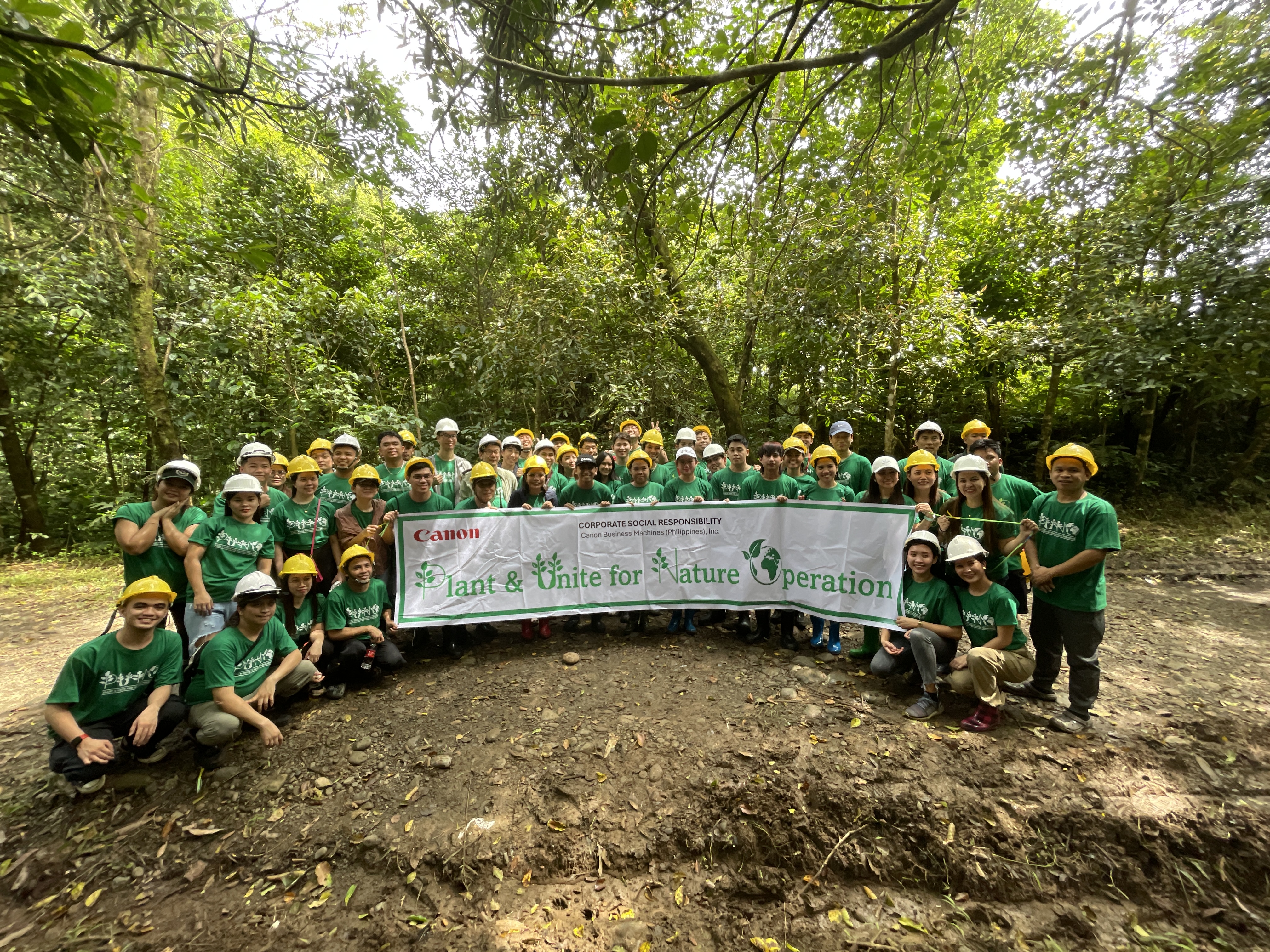
 Laguna, Philippines — September 20, 2025. As the holiday season drew near, the Laguna–Quezon Land Grant nestled within the Sierra Madre mountains became a space for meaningful environmental action and shared purpose. Sixty volunteers from Canon Philippines, joined by their Japanese supervisors, made the journey to the site to take part in a reforestation initiative aimed at restoring forest cover and strengthening one of the country’s most important ecological defenses.


 Before the planting began, Diane Peñales of FEED, introduced the Ridge to Reef program, a comprehensive conservation approach that connects forest restoration with the protection of mangroves and coral reefs. By safeguarding ecosystems from uplands to coastal waters, the program helps reinforce natural systems that sustain both inland and seaside communities.success of the initiative was made possible through strong collaboration among corporate partners, FEED, and local stakeholders. Forester Lorida, together with the Forest Guardians, provided technical guidance throughout the activity, while Ms. Rose Bocado ensured smooth coordination on the ground.

 Under bright sunlight and a cool mountain breeze, the day unfolded with rare clarity—an exception to the Sierra Madre’s typically unpredictable weather. Guided by FEED, along with local forest guards and technical experts, the group planted 750 native tree seedlings chosen for their ecological significance. These included 400 Maraluhat, 200 Kalumpit, and 150 Kupang—species well adapted to Philippine forests and vital to long-term ecosystem recovery.


 Native trees play a crucial role in restoring degraded landscapes. Having evolved alongside local flora and fauna, they provide natural food sources and shelter for endemic wildlife, while also improving soil stability and supporting healthy water systems. Compared to fast-growing exotic species, native trees are more resilient and sustainable, requiring less maintenance while preserving biodiversity that has developed over generations. By focusing on these species, the initiative contributed to rebuilding the forest in a way that honors its natural composition.


 Often referred to as the “backbone of Luzon,” the Sierra Madre has endured decades of environmental strain caused by illegal logging and other human activities. Efforts like this reforestation activity help rehabilitate the land by stabilizing slopes, restoring watersheds, and strengthening natural defenses against the growing impacts of climate change. Each seedling planted represents a step toward reviving the country’s longest mountain range—an essential refuge for wildlife and a critical resource for nearby communities.


Participants get to experience Sierra Madre’s natural beauty when they washed their hands in the stream near the planting site. Heading back to the base camp, the group passed by the nursery.


 Before the program ended, Forester Rey Lorida of the UP Laguna–Quezon Land Grant underscored the importance of sustained reforestation, reminding participants that environmental stewardship goes beyond seasonal efforts—it requires long-term commitment.
 The day concluded with a shared meal prepared by local women—an expression of gratitude and community spirit that brought warmth to the experience.

Through this collective effort, the volunteers showed that reforestation is more than the act of planting trees—it is a commitment to protecting life, strengthening resilience, and cultivating hope for the future. Each tree stands as a quiet promise that the Sierra Madre will continue to shelter generations to come, as long as people remain equally committed to its care.
Photo Library:


Use any GPS (Global Positioning System) software / applications to input the latitude and longitude coordinates to be able to remotely see the location of your trees planted. Some examples include:
- https://www.gps-coordinates.net/
- https://gps-coordinates.org
- https://www.maps.ie/coordinates.htmlhttp://www.mapcoordinates.net/en
About FEED

Tree-Nurturing Program with FEED
Immerse yourself in nature and explore our Tree-Nurturing Program in Siniloan, Laguna, nestled within the Sierra Madre Mountain Ranges. Witness the untouched beauty of Mother Nature—watch this video for a glimpse of the experience.

(C) Fostering Education and Environment for Development, Inc.