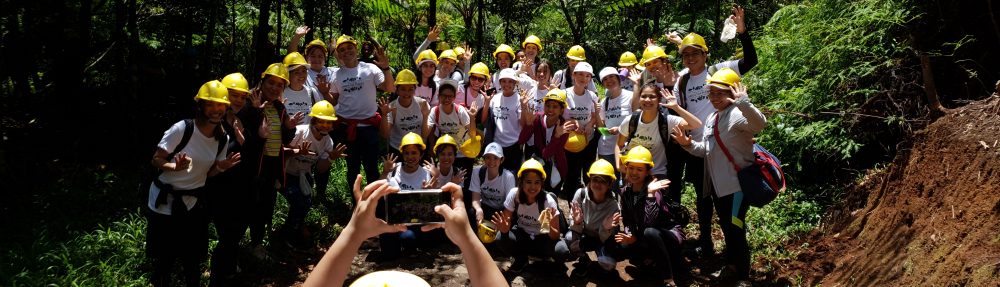
 23 November 2023, Don Mariano Marcos Memorial State University, Bacnotan, La Union. Fatima Jean R. Dumpit is a recent Bachelor of Science in Environmental Science
graduate from Don Mariano Marcos Memorial State University-North La Union Campus
(DMMMSU-NLUC). She became a beacon of academic excellence and environmental
leadership at the Institute of Environmental Studies (IES).
Fueled by passion for a purpose, she has been propelled to take on pivotal leadership roles, including Governor of IES and Cabinet Secretary for Linkages of the Campus Student Body Organization (CSBO). These roles enabled her to serve the student body, as well as to advocate for sustainable practices and foster a community committed to environmental stewardship.
Dumpit’s dedication to environmental pursuits extended beyond her academic career. She is a youth volunteer and is actively engaged in environmental initiatives, advocacy, and campaigns. Her involvement underscored her commitment to be a part of the solution to the pressing environmental issues.
A highlight of Dumpit’s academic journey was her thesis titled, “Carbon Stock Assessment of the Aboveground Biomass of Mangrove Species in Bauang Bakawan Eco-Tourism Park, La Union”.
This research was a testament to her dedication to understanding and conserving blue carbon ecosystems, such as mangrove forests, as nature-based solutions for mitigating climate change impacts.
Dumpit’s study aimed to estimate the carbon stock of mangroves in the eco-tourism
park while assessing species richness, density, and dominance. Employing rigorous
field methods, she established five study sites and applied indices, allometric
equations, and statistical analyses to her data.
The findings revealed a species richness of 7, with Kalapini emerging as the most dense species and exhibiting a dominance of 0.22. Dumpit computed diversity indices of 0.68 (Simpson’s) and 1.63 (Shannon-Wiener). Notably, the total carbon stock of the mangrove ecosystem was estimated at 19.36 tC/ha. Her research highlighted significant variations in carbon sequestration between different mangrove species, with Kalapini demonstrating the highest carbon stock at 6.79 t/ha.
Fatima Jean R. Dumpit exemplifies the embodiment of a new generation of environmental scientists who are not only academically accomplished but also deeply committed to environmental conservation. Her thesis work on mangrove ecosystems underscores the pivotal role of blue carbon environments in climate change mitigation strategies. As she continues her journey, Dumpit is poised to make significant contributions towards sustainable environmental practices and policies, ensuring a greener and more resilient future for generations to come.
For more details on FEED’s Scholarship program, visit: Scholarships
For an overview of FEED scholars, see: FEED Scholars.
On Carbon Sequestration and Planting
Storing carbon is only one of the ways that trees could affect climate, says Cat Scott, an atmospheric scientist at the University of Leeds in England who was not involved in the research. Just how these other factors play off each other is not yet clear. She and colleagues have developed computer simulations of trees contributing to cooling a landscape by releasing airborne molecules that invite clouds to form.
Even something as simple as the darkness of tree leaves can change how much heat a landscape absorbs or reflects. Expanding forests into formerly snow-bright, reflective zones, for instance, might warm them. In the tropics, however, the enhanced cooling from clouds might be the more powerful effect.
Ultimately, in the struggle against climate change, such heroic tree planting merely “buys us time,” says study coauthor Jean-François Bastin, also an ecologist at ETH Zurich. But that’s time human societies could use to stop emitting greenhouse gases, the real solution to climate change, he says.
Source: https://www.sciencenews.org/article/planting-trees-could-buy-more-time-fight-climate-change-thought
CONTACT FEED
In 2015, the Philippine government submitted to the United Nations the country’s commitments to reduce greenhouse gas emissions. The country committed to reduce its carbon emissions by 70 percent by 2030. The carbon dioxide reductions will come from the sectors of energy, transport, waste, forestry and industry.

FEED runs a number of Students and Volunteers for the Environment (SAVE); Corporate Social Responsibility (CSR) – such as mangrove planting for coastal protection or ridge reforestation plantings; One Child, One Tree; Bio-Intensive Gardens (BIG) for nutrition in public elementary schools and other spaces; Climate Change Survival 101 and other LIVING LEGACY programs – customised environmental engagement activities for individuals and organisations interested in contributing to climate change adaptation efforts and greening critical areas such as watersheds, ridges, and reefs that all require rehabilitation.
Join us! Help us reverse the Earth’s “hothouse climate” tipping point.
Tree-Planting with FEED
Check out the video journey by Clueless Commuter who planted with us last 24th of June 2017 to get a good idea of how FEED plantings go: https://youtu.be/KROn4rjVqBg

Contact us at FEED for more details, to join our regular activities or to design your own tree-nurturing event: info@feed.org.ph or call/text +63 (0)917 552 4722.
© Fostering Education & Environment for Development, Inc.