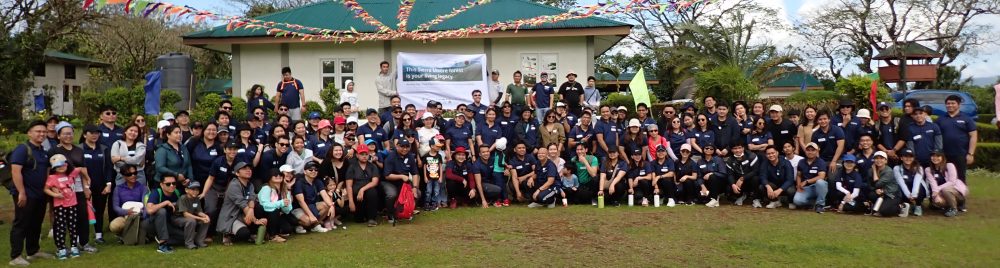
 On the misty morning of November 30, 2024, the Sierra Madre mountain range became the site of an inspiring environmental restoration effort. The Laguna Quezon Land Grant (LQLG), known for its chilly climate and frequent strong winds and rains, witnessed a determined group of individuals working toward a common goal—reforestation.
 Today, Cosmetique Asia Corporation, along with several of their brand ambassadors for FMCG products including Biogenic Alcohol and Juicy Cologne, spent the morning restoring a part of the Sierra Madres Mountain Range.
 Despite the challenges posed by the region’s unpredictable microclimate, which often sees rapid weather changes due to the mountainous terrain, the participants remained steadfast in their mission. After the usual welcome debrief about FEED’s Ridge to REEForestation programs, and a technical status of Philippine Forests by Forester Rey Lorida, Manager of the LQLG, the Cosmetique participants of Rakso-Biogenic proceeded to warm up and trail walk to their site about 30 minutes from base camp.

With dedication and enthusiasm, volunteers from Rakso Biogenic successfully planted 1,050 seedlings of native Philippine tree species. The reforestation effort included 430 Malaruhat, 300 Lipote, 30 Wild Rambutan, 50 Kupang, 40 Apitong, and 200 Yakal. These species were carefully selected for their ecological benefits and their ability to thrive in local conditions.

Why Plant Native Philippine Trees?
Native trees play an essential role in maintaining the country’s delicate ecological balance. Species like Wild Rambutan, Kupang, and Kuling Baboy are endemic, meaning they have naturally adapted to the Philippines’ climate, soil, and biodiversity over centuries. Planting these trees not only preserves the country’s unique flora but also ensures the survival of native wildlife that depends on them for food and shelter.

Chef Sabrina Artadi of Sabrina’s Kitchen on ocular finalising the planning for her Wellness Retreat and Glam Garden of Philippine native veggies for food security at LQLG.
Moreover, endemic trees are more resistant to local pests and diseases, reducing the need for chemical interventions and extensive maintenance. Their deep root systems help prevent soil erosion, improve water retention, and recharge groundwater supplies, making them particularly valuable in mountainous and upland areas. Additionally, native trees serve as natural carbon sinks, helping combat climate change by absorbing and storing carbon dioxide. Through efforts like these, degraded landscapes can be revived, strengthening the resilience of ecosystems against natural disasters such as landslides and floods.
The Ridge to Reef Program: A Holistic Conservation Approach
 During the event, Anne Marie Bakker of FEED delivered an inspiring message, emphasizing the importance of the Ridge to Reef program—a comprehensive initiative designed to restore interconnected ecosystems from mountain ridges to coastal areas. This approach recognizes that environmental restoration must extend beyond forests to include coastal and marine ecosystems.
 By focusing on reforestation in upland areas, the program helps stabilize slopes, reducing the risk of landslides and controlling erosion. As a result, water absorption improves, preventing floods that could devastate downstream communities. Beyond tree planting, the Ridge to Reef initiative integrates mangrove restoration and coral reef protection, strengthening coastal defenses against storm surges and enhancing marine biodiversity. Additionally, the program provides alternative livelihood opportunities for local communities, encouraging sustainable practices while empowering them to take ownership of conservation efforts.
Tree Nurturing: The Key to Long-Term Reforestation Success
FEED also champions the Tree Nurturing Program, an initiative that stresses the importance of collective action in ensuring the long-term survival of newly planted trees. Reforestation doesn’t end with planting—proper nurturing is crucial for seedlings to thrive and grow into strong, resilient forests.
 By bringing together local communities, organizations, and environmental advocates, the program fosters a shared sense of responsibility. This is particularly important in the Philippines, where decades of illegal logging and deforestation have caused severe ecological damage. Through sustained efforts in tree nurturing, these degraded landscapes can be gradually restored, offering hope for a more sustainable future.
Honoring the Eco-Warriors Behind the Success
The success of this initiative was made possible by the unwavering dedication of Rakso Biogenic’s volunteers, who showed that determination and teamwork can drive meaningful change. Their hard work was complemented by the support of the local community, particularly the women who prepared a nourishing meal for all participants.
 Special recognition is also due to the Forest Guardians, led by Forester Rey Lorida with the assistance of Ms. Rose Bocado, whose expertise and leadership ensured that the event ran smoothly. Their commitment to environmental protection played a crucial role in the success of this reforestation project.
 A Step Towards a Greener Future

FEED expresses its gratitude to all participants and partners who contributed to this reforestation effort. Initiatives like these are more than just tree-planting activities—they are acts of hope, resilience, and responsibility toward protecting the environment.
 Through continued collaboration, advocacy, and dedication, we can work together to restore forests, safeguard biodiversity, and build a more sustainable future for the Philippines.

Photo Journal/Gallery


GPS Site Coordinates & Pictures
Use Google Earth or any other readily available application/tool/website to input the latitude and longitude coordinates to access and view the forest location by satellite.


About Cosmétique Asia and Rakso-Biogenic
 Cosmetique Asia Corporation, established in 2001, is guided by its founder, Mr. Alexander S. Co who has over 30 years of cosmetic retailing experience.
The company began with the introduction of its flagship brand – Silka Papaya Soap, its first venture in the cosmetic industry.
After the Silka Papaya line gained popularity and market share in the whitening soap category, Cosmetique Asia launched Juicy Cologne, the company’s first foray in the fragrance industry.
With the success of both the Silka and Juicy brands, Cosmetique Asia brings in a new category to its growing portfolio in 2014 – Biogenic Alcohol.
As the company continues to expand its product lines, Bambini is relaunched as its first endeavor in the baby category. Bambini Baby Cologne is introduced in 2016.
Today, Cosmetique Asia Corporation continuously innovates and develops products to address the needs of its consumers.
For more details, visit: www.cosmetiqueasia.com/about-us
Tree-Nurturing Program with FEED
A glimpse into our upland reforestation program in Siniloan, Laguna foothills of the Sierra Madre Mountain Range —where local knowledge, generational care, and collective action come together to protect our watershed. Led by the community and supported by partners who believe in climate action, this initiative is more than planting—it’s legacy-building.
CONTACT FEED
In 2015, the Philippine government submitted to the United Nations the country’s commitments to reduce greenhouse gas emissions. The country committed to reduce its carbon emissions by 70 percent by 2030. The carbon dioxide reductions will come from the sectors of energy, transport, waste, forestry and industry.

FEED runs a number of Students and Volunteers for the Environment (SAVE); Corporate Social Responsibility (CSR) – such as mangrove planting for coastal protection or ridge reforestation plantings; One Child, One Tree; Bio-Intensive Gardens (BIG) for nutrition in public elementary schools and other spaces; Climate Change Survival 101 and other LIVING LEGACY programs – customised environmental engagement activities for individuals and organisations interested in contributing to climate change adaptation efforts and greening critical areas such as watersheds, ridges, and reefs that all require rehabilitation.
Join us! Help us reverse the Earth’s “hothouse climate” tipping point.
Email info@feed.org.ph for further info on organising your Climate Change Action Program or call/text +63 (0)917552 4722.
(c) Fostering Education and Environment for Development, Inc.