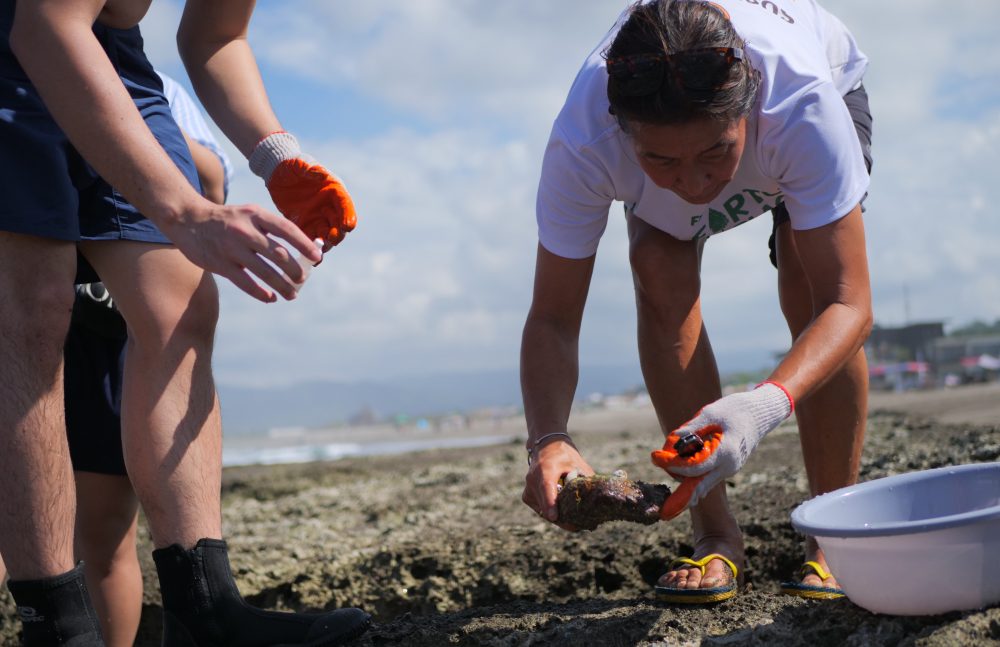
 Last November 21, 2025, participants from the Cignal TV Finance Group known as Finterest traveled to San Juan, La Union for a meaningful day dedicated to marine and coastal restoration.


 The morning began with an engaging introduction by FEED’s Anne Marie Bakker, who spoke about the vital role corals play as the foundation of marine ecosystems. She explained how healthy coral reefs support thousands of species, acting as underwater forests that nurture biodiversity and provide food for coastal communities. Anne highlighted the growing threats corals face—such as rising temperatures, destructive storms, and pollution—and why restoration efforts are needed now more than ever. She also emphasized that coral planting is not just an environmental task but a responsibility shared by all who rely on nature’s balance. Through her discussion, participants gained a deeper appreciation of how interconnected ocean health, community livelihoods, and climate resilience truly are. Inspired and informed, the group was ready to take part in the day’s hands-on activities.

 Afterwards, surf coaches and trained coral propagators from Jongky Surf School demonstrated how to properly plant coral fragments for successful growth.


 Participants together with the children from the community in Aringay then proceeded to the shoreline for actual planting, but due to large waves caused by seasonal currents, the newly planted 16 corals were temporarily placed in a safer nearby area in the ocean. These will be transferred to the coral nursery once waters are calmer, ensuring better survival rates for the young fragments.


 The group later headed to Baroro to plant 180 mangroves, where they worked with fisherfolk from the Asosasyon ti Mangalap ken Mannalon Baroro under the guidance of Manong Jessie.


 Much of the previously planted mangroves had been washed out during the strong Typhoon Uwan, leaving the area in urgent need of rehabilitation. Restoring the mangroves may require significant effort, but through collective action, the work becomes lighter and more impactful.


 The event also included a beach clean-up activity, where participants collected trash scattered along the shoreline—waste that had been washed ashore by Typhoon Uwan. Many of the items found were plastics and debris that had once floated out at sea, only to be thrown back to land by powerful currents. This served as a reminder that what we give to nature, whether good or bad, eventually returns to us. When the ocean is polluted, the effects come back through damaged ecosystems, weakened fisheries, and coastlines choked with debris. But when we give care, protection, and respect to the environment, it gives back healthier ecosystems, safer communities, and a more sustainable future.


 Collective action plays a critical role in the recovery of ecosystems, especially in coastal communities that rely heavily on nature’s stability. When individuals, organizations, and local groups come together, they are able to contribute diverse skills, resources, and perspectives that strengthen environmental projects. This shared responsibility builds long-term commitment, allowing restoration efforts to continue beyond a single event. Collective action also creates a sense of unity and empowerment among community members, reminding them that environmental healing is possible when done hand in hand. Most importantly, it helps build resilience—both ecological and social—ensuring that restored ecosystems can withstand future storms and challenges.

 During the event, the fisherfolk cooperative also sold their certified, homemade peanut butter—a simple yet powerful example of how alternative livelihoods can uplift coastal communities. Supporting these products helps diversify income sources, reducing dependence on fishing alone, which can be unstable due to seasonal changes or climate impacts. Community cooperatives create opportunities for locals to earn sustainably while preserving their natural resources. When visitors purchase these locally made goods, they directly contribute to the well-being of families who work hard to protect their environment. In turn, these livelihood efforts strengthen community pride and reinforce the value of conserving nature for future generations.


 Children from the Aringay community received school supplies along with a copy of “Bakawan”, a mangrove-themed book—an effort to inspire the next generation of environmental stewards and support their education.

FEED, together with its partners Jongky Surf School, Urbizgarden, DMMMSU and the community of fisherfolks extends heartfelt appreciation to the eco-warriors of Finterest. Their time, energy, and willingness to work alongside both nature and the community reflect the true spirit of stewardship. Through days like these, hope grows—one coral, one mangrove, and one collective action at a time.
Photo Library:


Coral Propagation – The Organic Approach (Ocean Quest Global)
Source: Ocean Quest Global via https://www.youtube.com/watch?v=TXqBEuP6MvQ
There are several methods of coral propagation around the world, many of which use questionable methodology including metal grids, PVC piping, leather and even electrolysis. What drew organizations like Sea Shepherd and Reef Guardian to Ocean Quest was its all-natural method. The founder of Ocean Quest, Anuar Abdullah, has spent most of his life on the coral reefs of Malaysia, observing their behavior and life cycles, and conducting his own research.
Nature Is Speaking – Ian Somerhalder is Coral Reef | Conservation International
Source: Conservation International (https://www.youtube.com/watch?v=lVMV3StvLCs)
About FEED

Get ready for an unforgettable adventure with our ECO-SURF Program in San Juan, La Union! Dive into a day of mangrove planting, coral restoration, beach clean-up action, and thrilling waves along the surfing capital of the North. Hit play and feel the energy of eco-adventure at its best!