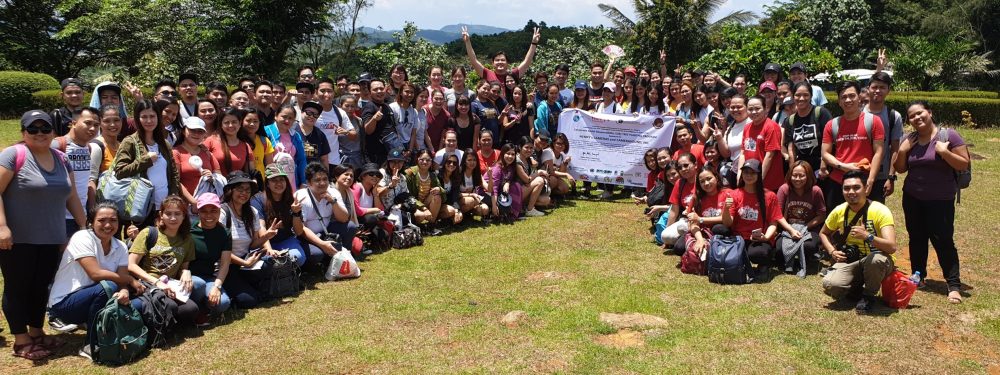
05 Oct 2024, Sierra Madre Mountain Range, Siniloan, UP Laguna Quezon Land Grant, Siniloan, Laguna. On October 5, 2024, as the dry season commenced in the Philippines, the morning sun bathed the Laguna Quezon Land Grant in a warm glow. The clear skies and gentle breeze provided a perfect setting for a meaningful tree-planting initiative. This weather was a stark contrast to the usual microclimates of the Sierra Madre mountains, known for their unpredictability—where sudden rain showers and gusty winds are common. Mountainous microclimates can shift drastically over short distances, affecting temperature, humidity, and wind patterns, making reforestation efforts both challenging and rewarding.
 Against this backdrop, the dedicated team from Henkel GBS gathered with a shared purpose—to contribute to environmental conservation by planting 1,500 native Philippine tree seedlings. They planted 700 Balitbitan, 200 Lipote, 50 Kupang, 50 Kuling Baboy, 200 Agusip, 100 Banilad, and 200 Marang. These species, endemic to the region, play a crucial role in maintaining the ecological balance and resilience of the forests.
 Reforestation with native tree species is vital for ecosystem restoration and biodiversity conservation. Unlike non-native species, which can sometimes disrupt local ecosystems, native trees are naturally adapted to the environment, making them more resilient. They provide habitat and food for wildlife, help regulate local temperatures, and maintain soil fertility. Their deep root systems prevent erosion and contribute to water conservation, while their canopies offer shade, supporting the natural climate regulation of the area.
 Moreover, these trees play a significant role in mitigating climate change. They absorb carbon dioxide, reducing greenhouse gas levels and helping to combat global warming. They also enhance water retention, ensuring a stable water supply—a critical factor for the sustainability of both natural ecosystems and human communities. By planting and nurturing native species, we not only restore forests but also safeguard the cultural and environmental heritage of the Philippines for future generations.
 The day began with an energizing morning exercise session led by Rose Bocado of the Laguna Quezon Land Grant, preparing participants for the physically demanding activity ahead.
 Following this, Anne-Marie Mananquil Bakker of FEED shared insights on the significance of the Ridge to Reef program. This initiative promotes holistic environmental restoration, from upland forests to coastal ecosystems, ensuring that each part of the natural system thrives in harmony. By reforesting mountain slopes with native trees, the program helps reduce flood risks, prevent soil erosion, and stabilize watersheds, ultimately benefiting coastal and lowland communities.
 Beyond tree planting, the Ridge to Reef approach also includes mangrove and coral restoration, reinforcing the interconnectedness of ecosystems. This comprehensive strategy not only protects the environment but also supports local communities by providing alternative sustainable livelihoods, empowering them to become proactive stewards of nature.
 The Sierra Madre mountain range, often referred to as the “backbone of Luzon” – always reiterated by Forester Rey Lorida, Manager of the Land Grant – serves as a critical defense against typhoons, acting as a buffer that weakens storms before they reach densely populated areas. Beyond its role in disaster risk reduction, this vast forested region is a biodiversity hotspot, home to countless endemic plant and animal species. It plays a crucial role in maintaining water supply, preventing landslides, and regulating the overall climate.
 As climate change intensifies, preserving the Sierra Madre has become even more urgent. Forests within the range act as carbon sinks, absorbing significant amounts of carbon dioxide and helping to combat global warming. Protecting and nurturing these forests ensures the resilience of both natural ecosystems and the millions of people who depend on them for water, food, and climate stability.
This initiative would not have been possible without the commitment and enthusiasm of the Henkel GBS volunteers, whose dedication to sustainability continues to inspire. Special appreciation goes to the local community members, especially the women who prepared a nourishing meal for all participants. Gratitude is also extended to the Forest Guardians, led by Forester Rey Lorida, and to Ms. Rose Bocado, who expertly facilitated the event.
 Through partnerships like this, FEED remains steadfast in its mission to restore and protect the environment, one tree at a time. As we continue these efforts, we invite more organizations and individuals to take part in creating a greener and more sustainable future.

 “As an archipelago, everything in our environment is connected. When we plant trees in the mountains, we’re not just protecting the land—we’re safeguarding rivers, coastal communities, coral reefs and as important the communities who manage them – our frontline farmers, fisherfolk and forestry communities. When forests are healthy, they prevent erosion and flooding. When mangroves thrive, they protect us from typhoons and storm surges. Ridge to Reef isn’t just about nature—it’s about people. It’s about food security, clean water, and sustainable livelihoods. And it’s about climate resilience versus climate crisis – flip side of the same coin. That’s why we should all get involved. Plant. Native. Even just one tree or mangrove can be part of a larger movement. When we act together, we help build a future that’s greener, safer and more sustainable for all.” -FEED Partnerships Director, Anne Bakker
 Photo Gallery


Additional Photo & AV Gallery


GPS Coordinates
To follow.
About Henkel & Corporate Citizenship
 At Henkel, Corporate citizenship is our way of “Making society future-fit”. Our activities are designed to empower people through education to obtain the skills and competencies needed to develop innovative ideas, sustainable behaviors, and new digital solutions that will put them in a position to master future challenges and capitalize on opportunities. Together with our employees, pensioners, customers, consumers, partners and charitable organizations, we are committed to making a lasting contribution to society worldwide, above and beyond our business activities. We work together to actively contribute to social progress and give back to our communities contributions that improve our society and adhere to our purpose and corporate values.
Deeply embedded in our corporate culture is the drive and character of Corporate Citizenship to go beyond our core daily business and make a voluntary social commitment. With these efforts, we are letting our communities know with more than words that we are Pioneers at Heart for the Good of Generations.
Henkel’s commitment is based on three pillars: volunteer engagement by our employees, partnerships with charitable organizations, and emergency aid with focus on natural disasters and pandemics. Discover the three areas in which we organize our engagement.
For more details, visit: Henkel.com
About the Holistic Ridge to REEForestation Approach
Ridge to Reef (R2R) is a critical conservation approach in the Philippines because it reflects the country’s unique geography and interconnected ecosystems. The Philippines is an archipelago with thousands of islands where upland, lowland, and marine ecosystems are closely linked. Here’s why this approach matters so much—and why more people should get involved, especially in volunteering and planting:

🌄 Why is Ridge to Reef important in the Philippines?
- Interconnected ecosystems: Activities in the mountains (ridge) directly affect rivers, lowlands, and eventually the ocean (reef). Deforestation upland can lead to erosion and sedimentation that damage coral reefs and marine biodiversity.
- Biodiversity hotspot: The Philippines is one of the most biodiverse countries on Earth, both on land and underwater. Protecting the entire ecosystem—from ridge to reef—is necessary to conserve this rich biodiversity.
- Disaster risk reduction: Healthy upland forests reduce the risk of landslides and flooding. Coastal ecosystems like mangroves and coral reefs buffer storm surges and prevent coastal erosion—crucial for a country frequently hit by typhoons.
- Food and livelihood security: Millions of Filipinos depend on agriculture, fisheries, and tourism. Poor land and water management upstream can destroy coral reefs and fisheries downstream, putting livelihoods at risk.
- Climate resilience: Restoring forests and marine ecosystems increases carbon storage, helps regulate water cycles, and builds resilience to climate impacts like droughts and rising sea levels.


🌱 Why should more individuals and organizations plant?
- Tangible impact: Planting trees or mangroves helps restore degraded ecosystems. Even small contributions, when done consistently and at scale, can lead to major environmental benefits.
- Community empowerment: Volunteering connects people to local communities and helps build awareness and capacity. It strengthens local ownership and stewardship of natural resources.
- Education and awareness: Participation helps individuals understand environmental challenges and see firsthand how ecosystems are connected—from mountains to oceans.
- A sense of purpose: Volunteering in environmental work gives people a concrete way to act on climate and environmental concerns, beyond social media or advocacy.
- Inspiring collective action: One person’s commitment can encourage others—friends, family, schools, or entire barangays—to take action, creating a ripple effect.
 🧭 Final Thought

The Ridge to Reef approach isn’t just a conservation strategy—it’s a lifeline for the Philippines. Volunteering and planting are practical, powerful ways for individuals to help heal the environment, protect biodiversity, and secure a sustainable future for generations of Filipinos.
Tree-Nurturing Program with FEED
Immerse yourself in nature and explore our Tree-Nurturing Program in Siniloan, Laguna, nestled within the Sierra Madre Mountain Ranges. Witness the untouched beauty of Mother Nature—watch this video for a glimpse of the experience.
CONTACT FEED
In 2015, the Philippine government submitted to the United Nations the country’s commitments to reduce greenhouse gas emissions. The country committed to reduce its carbon emissions by 70 percent by 2030. The carbon dioxide reductions will come from the sectors of energy, transport, waste, forestry and industry.

FEED runs a number of Students and Volunteers for the Environment (SAVE); Corporate Social Responsibility (CSR) – such as mangrove planting for coastal protection or ridge reforestation plantings; One Child, One Tree; Bio-Intensive Gardens (BIG) for nutrition in public elementary schools and other spaces; Climate Change Survival 101 and other LIVING LEGACY programs – customised environmental engagement activities for individuals and organisations interested in contributing to climate change adaptation efforts and greening critical areas such as watersheds, ridges, and reefs that all require rehabilitation.
Join us! Help us reverse the Earth’s “hothouse climate” tipping point. Email: info@feed.org.ph or text/call +63 (0)917 552 4722.