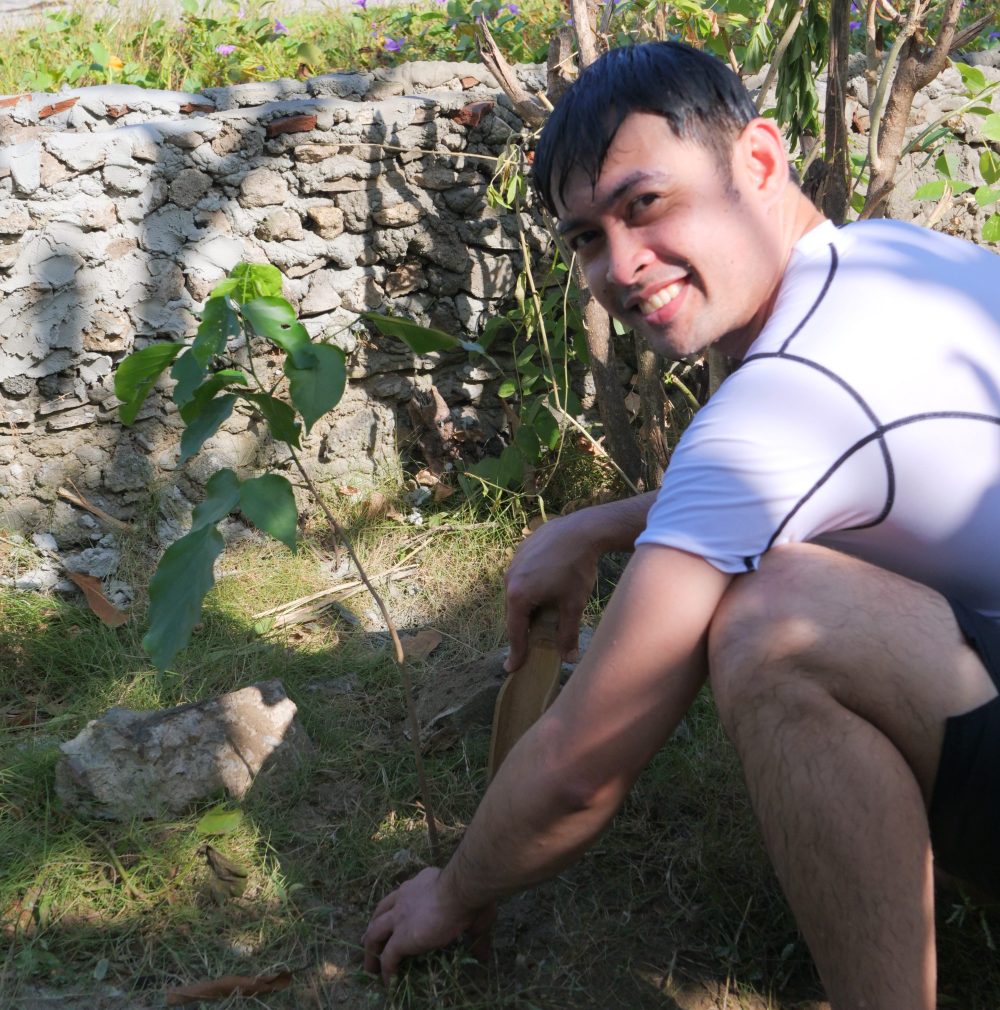
 16 June 2024, Laguna Quezon Land Grant, Siniloan, Laguna. On June 16, 2024, a bright early morning marked the start of a meaningful event as nine dedicated participants from Omega Healthcare gathered at the Laguna Quezon Land Grant in Siniloan, Laguna. The day was blessed with clear skies, a gentle breeze, and fine weather—a welcome contrast to the usual micro weather in the Sierra Madre Mountains, which often brings rain and strong winds due to the region’s unique geographical features. This variability is influenced by elevation, proximity to forests, and frequent weather disturbances, resulting in cooler temperatures, sudden rainfall, and gusty winds.
During the event, the team successfully planted 200 seedlings of native Philippine trees, consisting of 60 Balitbitan, 70 Wild Rambutan, and 70 Marang. These native species are not just symbols of biodiversity but are vital components of the country’s ecosystem. Planting endemic trees ensures compatibility with local soil and climate, promoting faster growth and resilience. Native trees also support wildlife by providing food and shelter, maintain genetic diversity, and restore degraded landscapes. Unlike exotic species, which can disrupt ecosystems, native trees are integral to the Philippines’ ecological balance.
Understanding the Ridge to Reef Program

 Before the tree planting activity, participants engaged in a coffee discussion led by FEED, Inc., where they learned about the Ridge to Reef Program. This comprehensive initiative focuses on restoring forest landscapes using native trees to reduce flood impacts, stabilize slopes, and enhance water absorption in upland areas. These efforts protect lowland and coastal regions from flooding and erosion.
The program’s approach extends beyond reforestation, incorporating mangrove and coral restoration to safeguard coastal ecosystems. This interconnected strategy ensures the health of ecosystems from the mountains to the seas, fostering harmony between nature and human communities. Additionally, the Ridge to Reef Program provides alternative livelihoods for local communities, empowering them to become independent facilitators of environmental initiatives.
Importance of Native Philippine Trees

Native trees are essential for ecosystem restoration and climate resilience. They prevent soil erosion, improve water absorption, and enhance the fertility of the land. Their roots stabilize slopes, reducing the risk of landslides and floods—a critical benefit in mountainous areas like the Sierra Madre. Additionally, these trees act as carbon sinks, mitigating climate change by absorbing and storing significant amounts of carbon dioxide.
Planting native trees also supports local flora and fauna. For instance, Wild Rambutan and Marang are fruit-bearing trees that attract pollinators like bees and birds, fostering biodiversity. By choosing endemic species, we ensure that restoration efforts are sustainable and culturally significant, preserving the natural heritage of the Philippines.
Tree Nurturing and the Role of the Sierra Madre


The Tree Nurturing Program underscores the importance of the Sierra Madre Mountains as a natural barrier against typhoons. Often called the “backbone of Luzon,” the Sierra Madre absorbs the impact of strong winds and heavy rains, reducing damage to lowland areas. As climate change intensifies weather patterns, protecting and restoring the Sierra Madre is more critical than ever.
The upcoming typhoon season highlights the urgent need for reforestation and sustainable environmental practices. Planting and nurturing trees in the Sierra Madre not only enhances its protective capacity but also addresses the broader challenges of climate change by improving carbon sequestration and promoting ecosystem resilience.
Illegal logging has plagued the Philippines for decades, devastating forests and the communities that depend on them. Forester Rey Lorida, who has spent years battling illegal logging in the Sierra Madre, shared his experiences during the event. His work underscores the mutual relationship between humans and nature. Recovering degraded forests is not just about restoring landscapes but about healing communities and ensuring their survival.
Through enforcement and education, efforts to combat illegal logging are gradually bearing fruit. However, more collective action is needed to rebuild the Sierra Madre’s forests, reinforcing the idea that humanity needs nature far more than nature needs us. Sustainable reforestation, coupled with community engagement, is key to restoring balance.


Omega Healthcare’s eco-warriors once again demonstrated their determination and enthusiasm, making this tree planting event a resounding success. Special thanks go to the local community, especially the mothers who prepared a sumptuous lunch for the participants, and the Forest Guardians who continuously protect the area. The event was skillfully facilitated by Forester Rey Lorida, with the assistance of Ms. Rose Bocado, ensuring a seamless and impactful experience.
With 200 native Philippine trees now rooted in the soil of the Sierra Madre, this event serves as a testament to the power of collective action. We look forward to more meaningful partnerships that nurture both the environment and the communities that depend on it.
GPS Coordinates of Planting Site
Use any GPS (Global Positioning System) software / applications to input the latitude and longitude coordinates to be able to remotely see the location of your trees planted. Some examples include:
- https://www.gps-coordinates.net/
- https://gps-coordinates.org
- https://www.maps.ie/coordinates.htmlhttp://www.mapcoordinates.net/en
Photo Library:


CONTACT FEED
In 2015, the Philippine government submitted to the United Nations the country’s commitments to reduce greenhouse gas emissions. The country committed to reduce its carbon emissions by 70 percent by 2030. The carbon dioxide reductions will come from the sectors of energy, transport, waste, forestry and industry.

FEED runs a number of Students and Volunteers for the Environment (SAVE); Corporate Social Responsibility (CSR) – such as mangrove planting for coastal protection or ridge reforestation plantings; One Child, One Tree; Bio-Intensive Gardens (BIG) for nutrition in public elementary schools and other spaces; Climate Change Survival 101 and other LIVING LEGACY programs – customised environmental engagement activities for individuals and organisations interested in contributing to climate change adaptation efforts and greening critical areas such as watersheds, ridges, and reefs that all require rehabilitation.
Join us! Help us reverse the Earth’s “hothouse climate” tipping point.
Tree-Planting with FEED
Check out the video journey by Clueless Commuter who planted with us last 24th of June 2017 to get a good idea of how FEED plantings go: https://youtu.be/KROn4rjVqBg

Contact us at FEED for more details, to join our regular activities or to design your own tree-nurturing event: info@feed.org.ph or call/text +63 (0)917 552 4722.
© Fostering Education & Environment for Development, Inc.